Tuesday, August 31, 2010

Fairytales and Myths

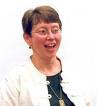
by Laura Packer

 As you know, over the last month or so we've been exploring different ways of telling stories. We've looked at tall tales, personal stories, hero stories and scary stories. This last installment will explore fairy tales and myths.

I know that clumping fairy tale and myths together may seem like sacrilege. These ancient  forms of story serve different purposes and volumes have been written about their meaning. Bear in mind, from a telling perspective, you need to do some similar work to tell these stories, so I thought it would be easier to talk about them in the same post.

Myths and fairy tales capture the whole range of human experience. They help us understand our lives and how our individual experiences are more alike than different. They give us a roadmap to use as we travel our lives. They are the stories that ripple through our cultures and our lives, giving us a common language with which to understand the world.

  • Just because it's a fairy tale doesn't mean it's a simple story. Many of the these stories are dark, frightening, or at a minimum explore some of the more challenging times of life (childlessness, parental abandonment, learning who you are, adolescence, etc) so spend some time with the story and decide how you want to tell it. Do you want to focus on the happy endings? Are you more interested in the voice of a minor character?
  • Understand where the story comes from. Myths come with a cultural context, so you should have some understanding of where the story comes from and what it means in context. Some myths are still considered sacred stories, so think carefully about where you stand on telling a story that has sacred meaning to other people. Always tell living myths respectfully.
  • Explore why the story appeals to you. Myths and fairy tales are rife with symbols, so it's worth spending some time understanding why a particular story appeals to you, what the symbols mean to you. This can be the work of years, so please tell the story, but just don't be surprised if it has unexpected meaning for you.
  • If you change the story do so carefully, without stripping the heart out of the story. The Disney version of The Little Mermaid overlooks her death at the end, entirely changing the meaning of the story; if you choose to change a story make sure you understand why you're doing it and how the meaning will be altered. Be especially careful about changing myths, since these may be living sacred stories. If you modernize the story make sure you honor the original text in whatever way makes the most sense to you.
  • Select the right story for the audience. This is a tenet no matter what kind of story you're telling. Be wary of using accents unless you're very good at them, and if you choose to tell stories from a particular culture to that culture and you're not of that culture make sure you treat the stories with utmost respect and be prepared to get some feedback.
Fairy tales and myths are among the most enjoyable stories you can tell - they are deep in our psyches and convey experiences we can all relate to. Who hasn't been lost in the woods or undertaken a journey from home? Enjoy telling these stories. They are part of our human heritage. Just don't forget to do the same work you would for any other kind of story.

And remember, there are several local opportunities to learn more about storytelling. Check them out here. And don't forget the 2010-2011 Story Slam season is about to start - you can see the schedule here.

Next week we'll take a little breather with a link round-up, then we'll spend some time looking at the ethics of storytelling. Keep telling!

Telling topics - tall tales  by Laura Packer

As you know, over the last few weeks we've been exploring the different kinds of stories you can tell. So far we've looked at personal stories, hero stories and scary stories. Today we'll look at tall tales.

Let's face it - we all lie. But when you tell a tall tale you can lie with impunity. Your audience expects it, wants it and is looking forward to how boldly you lie. A tall tale is a story with wildly exaggerated elements - the tall man becomes a giant, the small fish becomes a huge one, the harvest is over-run with giant vegetables - and it's usually witty or clever. Some common examples of tall tales include Paul Bunyan stories and shaggy dog stories. You can find some other examples here. But you can make up and tell your own tall tales out of your own life too. Here are a few tips and tricks to consider:

  • Start with something commonplace. A walk through your town leads you to a local person with some unusual characteristics. Playing a game of football leads to a player who can throw a ball so high you have time to go inside, watch tv, eat dinner and do your homework before you have to catch it. 
  • Use your imagination. Tall tales require exaggeration. If something was big it becomes enormous. If someone was strong they become the strongest person in the world. 
  • Don't hesitate to use outlandish examples and comparisons. The fish was bigger than a six-car train. It was so big that the hook we used to catch it was made from a piece of steel my strong uncle ripped out of a nearby building. 
  • Keep it relatable. Whatever it is that happens, your audience should have had a similar, though smaller experience. They should have at least heard of fishing if it's a story about a giant fish that got away. They should have at least seen football on tv if it's about someone with an amazing throwing arm who eventually is asked ot throw a space shuttle into the sky.
  • Keep it fairly short. If it goes on too long your audience may get tired of being asked to suspend their disbelief.
  • Try to end it with the possibility of another story. I don't know where he is now, but last I heard NASA had hired him for some other emergency mission. I keep watching the news to see if he'll turn up.
  • And have fun! You should enjoy the story just as much as your audience.
Don't forget, there are several local opportunities to learn more about storytelling. Check them out here. And don't forget the 2010-2011 Story Slam season is about to start - you can see the schedule here.

Next week we'll wrap up this series with a look at fairy tales and myths. Keep telling those stories!

(c) 2010 Laura S. Packer

Tuesday, August 24, 2010

Telling topics - scary stories by Laura Packer

Monday, August 23, 2010

by Laura Packer


Telling topics - scary stories

Cross-posted from massmouth

Over the last few weeks and for one or two more we’re taking a look at some of the topics you can explore as you expand your telling repertoire. Last week we took a look at personal stories while the week early we looked at hero stories. Today we’ll look at scary stories. I'd hoped to cover tall tales today, too (alliteration!) but scary stories turned into a long post.


In the context of this blog post scary story means a story with some kind of supernatural or horrific element (haunted house, movie-style killer) rather than a story of real-life horror (bank foreclosure, natural disaster, real-life murder). These stories are meant to give your listeners a delightful chill, not a lingering dread.


Whenever I tell stories with kids and ask them what they'd like to hear, they always ask for a scary story. It seems to be what kids are most familiar with in a "storytelling" context, maybe from camp or from other media sources. Because these stories have such deep appeal for children I'd recommend that you have several in your repertoire that are appropriate for younger people. You can always tweak details to make them more appropriate for adults.


The single most important element in telling a scary story is you, just as it is in all storytelling. You have to believe what you're saying; it's even better if you think the story is creepy. If you are insincere your listeners will know and won't be drawn into their own imaginations. You can increase the intimacy and believability of scary stories by lowering your voice, lowering the lights, looking around as if you're nervous and telling your listeners that you don't usually tell this one, because it scares you.


Some other common elements in effective scary storytelling are:
  • Locale. It really helps if you can include regional details your listeners will recognize. It will make the story more believable. Yes, this means changing the story. As long as you're telling a traditional story (more on where to find these momentarily) or making it up yourself, that's okay. If you're telling someone else's story then you have already gotten permission and discussed the alteration with them. If you are a region you don't know, so can't make the story local, then make it local to you. It happened in your neighborhood, near your school or at your summer camp. If it's a traditional story where the locale must remain distant, make sure you set that context appropriately. "This is a story from ancient Japan. People still tell it around campfires and they know it's real."
  • Eye-witness accounts. If appropriate, for example when telling an urban legend, tell them you heard the story from the person it happened to. This increases believability. If it's something that happened to you, tell them.
  • Vocal control. If you're telling a jump-tale (a story that ends with a bang so your audience jumps) make sure you don't broadcast it ahead of time. Keep your voice at the same volume right up to the yelling part.
  • Select the right story for your audience. Remember who you are and who they are. This goes back to basic storytelling technique. If you can't do an accent well, don't do it, your listeners will be distracted. If you're a white, middle-aged man don't pretend to be a young black woman if you're telling about a haunted place in the 'hood. You can always say you heard the story from a student. Additionally, select the right level of creepiness for your audience. Kindergartners don't need to know all of the horrible details, while college students might revel in them.
  • Internal logic. Be aware of logical holes in the story, especially when telling with kids. If everyone dies in the story then how did you hear it? Kids will ask you about it.
  • Practice. You will be a better storyteller if you practice your craft and approach it as work worth investing yourself in.
So where can you find some good scary stories to tell? Folklore is rife with scary stories. This is a good resource as is the urban legend database. Remember to tweak those details to make it local. I tell a version of the vanishing hitch-hiker that I always change to include wherever I am: In the Northeast you're never far from a cemetery, I bet wherever you are you can find something spooky nearby. 

Folklorist Alvin Schwartz has collected many American folktales in Scary Stories to Tell in the Dark Boxed Set. Another good book is The Ghost & I: Scary Stories for Paticipatory Telling; I especially like this one because it includes both telling tips and stories for adults as well as kids. Additionally, the authors have given permission for storytellers to tell these tales. 

I'm sure you can find many more good resources at your local library or bookstore. Just remember to ask permission to tell other people's stories. For those in the Boston area, I'll be teaching a storytelling class at the Brookline Center for Adult Ed starting in September. I'd love it if you came and told with me!

Have fun telling these tales. Scary stories are among the most dramatic and playful of stories you can tell. I'm sure you'll enjoy experimenting with them. Next time we'll take a look at tall tales. See you soon!

Tuesday, July 27, 2010

Tall tales: Meet the storytellers spinning edgy new yarns for the digital age


Spinning a good yarn is the most ancient of entertainments – but thanks to the iPod generation, it's getting a new lease of life
By Lena Corner
Sunday, 22 August 2010
The Spoken Ink group was set up two years ago to perform modern short stories for contemporary audiences, with tales from authors such as Neil Gaiman and Angela Carter in its repertoire
PAL HANSEN
The Spoken Ink group was set up two years ago to perform modern short stories for contemporary audiences, with tales from authors such as Neil Gaiman and Angela Carter in its repertoire

    Monday, April 12, 2010

    Winners of the Brother ( Hugh Morgan) Blue and Ruth Hill Award, 2010


    Today, the winners of the 2010 Brother Blue and Ruth Hill award met to celebrate and install their plaque at Toscanini’s in Central Square Cambridge. “This is where it all started” said the massmouth founders, (from top left) Norah Dooley, Andrea Lovett, Stu Mendleson and Doria Hughes. "Toscanini's has been so good to us. They've donated "office" space, performing space, ice cream, a prize for the Big Mouth Off and sponsored our videos at cctv as well," said Dooley. She comes from the same borough of NYC as Gus and Mimi also was at the Boston Museum School at the same time as Gus Rancatore. All the Brother Blue winners are loyal fans of Toscis ice cream, the amazing baristas and the excellent coffee.
    The massmouth team reminisced about how Brother Blue and Ruth had attended and performed at the first massmouth event at Toscanini’s in August of 2008. "He is missed but he lives on in the stories, " they said. Each year LANES.org honors those who “give their lives to storytelling” at their annual conference, Sharing the Fire.

    Excerpt from this massmouth blog:
    "On Saturday, March 20, 2010, massmouth founders Norah Dooley, Doria Hughes, Andrea Lovett and Stu Mendelson were awarded the Brother Blue and Ruth Hill Award by the League for the Advancement of New England Storytelling in recognition of their extraordinary commitment and efforts to promote a broader understanding of the art of storytelling and the support of storytellers in the development of their art. It serves, as Brother Blue (Hugh Morgan Hill), has said, “To honor those who give their lives to storytelling to change the world.”

    When the award was announced the crowd rose to their feet and cheered, in delighted recognition of all that massmouth has done to build storytelling in Massachusetts." -
    Laura Packer, Storyteller

    The massmouth founders have been having an eventful year –in October they started a series of story slams in Greater Boston. Ms. Dooley helped secured a not-for-profit umbrella agreement with The National Storytelling Network, so that any donations can be tax-deductible and Ms. Lovett has been profiled by The Boston Sunday Globe. Doria Hughes served as a judge at the last Cambridge slam in addition to many local gigs. And Stu Mendleson has been traveling in Africa, teaching drumming and hosting massmouth open mics, with Doria Hughes, for over a year.

    Monday, April 5, 2010


    Storytelling excellence

    by Laura Packer

    Last month at Sharing the Fire: Northeast Storytelling Conference Bill Harley presented a keynote that raised worthwhile questions about storytelling as an artform. He challenged the storytelling community and storytellers as artists to strive to be better, to not settle for the label of folk art but to do the necessary work to raise storytelling to the same level as theater, dance and other fine arts. This rings resonant with my work as a producer and performer. I believe that yes, we are all storytellers, because that it is part human nature to tell stories. But as performing artists we have a responsibility to always improve our art, to work on the craft, to not just assume that the label “storyteller” makes it okay to be sloppy.

    Bill Harley laid out several questions we can ask ourselves to help us become better artists. If we take ourselves and our work more seriously the world will too. In the next few weeks leading up to the Big Mouthoff I’d like to look at some of these issues in detail with the hopes that it will help all storytellers of every stripe, from slammer to epic performer.

    Harley has the following checklist for every performer to consider as they develop a piece (to read it in detail click here. And you should):

    • Narrative Form
    • 
Language

    • Voice and Physical Instrument
    • 
Performance Skills

    • Relationship with the Audience

    • Show Structure

    • Aesthetic

    Let’s start with Narrative Form. Harley suggests every performer ask themselves the following about narrative form:
    Is the structure of the piece strong – does it show an understanding of narrative structure, even if only to make it possible to experiment with that structure? Is the structure flabby – are there parts that do not belong? Is there an awareness of narrative tension? Does the piece show an understanding of character’s place in the narrative? Is there resonance in the piece, with elements introduced early bearing fruit later on? Is there an understanding of an underlying subtext in the story? Is it clear that the storyteller knows what the story is about? Has s/he made choices about what material to present to best serve the heart of the story? Is there a dramatic build that reaches some form of climax when a truth is revealed? Is this revelation presented in a way that delights or enlightens or moves the audience? ©2009 Bill Harley

    Massmouth slam judges are asked to rank three criteria, the first being narrative form. Does the story have a beginning, middle and an end? Does the story make sense? It makes sense that this is a point of judgment because in any narrative artform we long for coherence. We want motion and closure. Checkov said, "One must not put a loaded rifle on the stage if no one is thinking of firing it." The same applies to storytelling. Every element needs to be there for a reason. If you’ve practiced your piece you have a chance to cut out the narrative fat, the unnecessary elements, no matter how beloved they may be.

    Storytellers have an additional burden that most narrative artists don’t have. They work in real-time with a live audience. If you don’t know what the story’s about or you lose your train of thought because you are so busy trying to tie up loose ends, the audience knows. You don’t get to rewrite, try a scene again or rewind the DVD. You must know your story, why you’re telling it and why each part is there.

    Slam storytelling provides different challenges than longer form. You have very little time to create a coherent narrative, so your story must be direct. You need to know what you’re saying and why. This may be part of why slams are so effective for newer tellers – they aren’t tied up in trying to get all the little nuances in, they just want to tell the story. The short time limit means you don’t have time to worry about narrative fat.

    Long form storytelling offers both more and less freedom than slam stories. While you have more time to spin out your narrative, more opportunity to weave interesting characters and explore the interstices of the story, you also have more opportunities for loose ends, more opportunity to get lost in your own love of a particular detail. You do have more time to build tension and have a satisfying ending but more room for failure. It takes work to build a successful long story. These stories in particular can fool the artist into thinking they know their own meaning. How often have you worked on a piece (anything – story, writing, art, etc) then come back to it years later to find meaning hidden that you never realized was there? This is a particular risk with long, told stories. If you find unexpected meaning in the middle of a performance, you risk violating the audience’s relationship with the story if your performance falters as you have your revelation.

    And that’s what it comes down to. Know your story. Know what matters in your story and what doesn’t matter. Tell what matters. Discard the rest. Leave your audience the white space to do the heavy lifting and trust them.

    Next time I’ll look at Language and Voice and Physical Instrument. In the mean time, practice your stories and plan to come to the Big Mouthoff to hear storytelling in action!